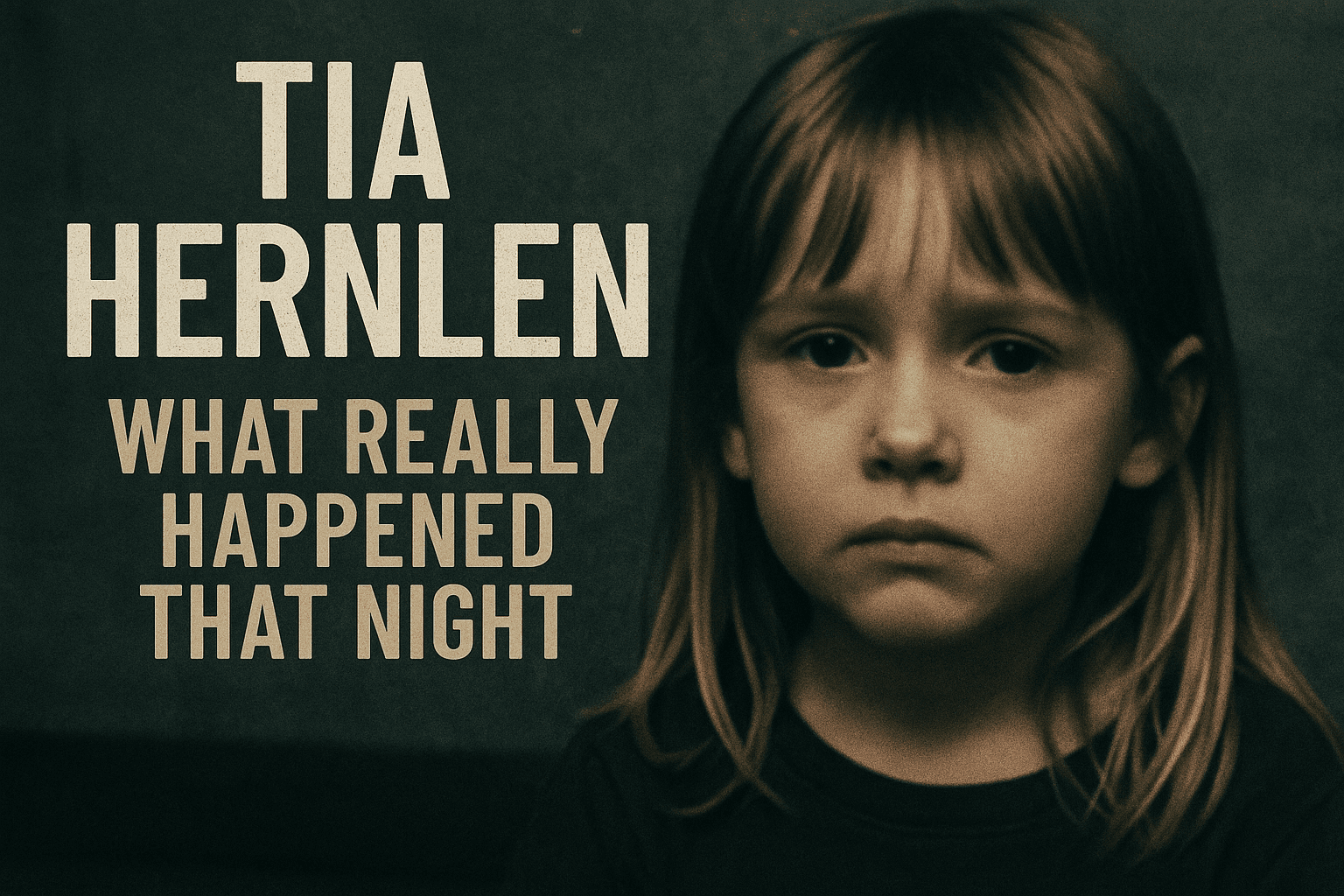
The Morning That Changed Everything It was supposed to be an ordinary Monday. For most people in the quiet suburb of Deltona, Florida, March 28, 2005, began like any other day. But for a little girl named Tia Hernlen, that morning marked a point in time that would divide her life into before and after. At just five years old, Tia woke up to sounds no child should ever hear. There were muffled voices, loud noises, and then an eerie silence. Tia did what many children her age might have done. She got out of bed, walked down the hallway, and found her parents unresponsive. Their bedroom had become a place of horror. Her small voice calling out went unanswered. Tia picked up the phone and dialed 911. The audio of that call, which would later circulate widely in the media, became one of the most heartbreaking recordings of the decade. She told the dispatcher her mommy and daddy were on the floor. She said she thought they were dead. The innocence in her voice, the confusion in her tone, and the quiet bravery she showed moved millions across the country. She asked if someone could come take care of her. That one moment captured a mix of vulnerability and courage that few adults could muster, let alone a five-year-old child. What made that morning even more tragic was the backstory that led to it. Tia’s father, who had previously reported threats and concerns about a man named David Edward Johnson, had not received the protection he needed. Despite taking legal action and filing for a restraining order, the system did not respond in time. Johnson forced his way into the Hernlens’ home and took both parents’ lives before ending his own. Tia was the only one left behind. That morning became national news. People were shaken not just by the brutality of the act, but by the small voice of Tia Hernlen, who had done something extraordinary in the face of unimaginable trauma. She became the symbol of what happens when systems fail, and children are forced to step up in ways no child should have to. Life Before That Night Before tragedy found its way to the Hernlen household, life was ordinary in the most comforting way. Tia Hernlen lived in a Florida neighborhood that looked just like any other quiet American suburb. The kind with trimmed lawns, driveways filled with bicycles and basketball hoops, and kids who grew up thinking their world was safe. Her parents, Julie and Lester Hernlen, were both hardworking, responsible, and involved in their daughter’s upbringing. They lived modestly but contentedly, focused on creating a nurturing home environment. Lester worked as a carpenter and Julie balanced being a mother with part-time jobs in the community. They were known by neighbors as kind people, always ready with a wave or a friendly word. Tia was often seen playing in the yard, either chalking up the driveway or riding her little pink bike. No one would have guessed that such a normal-looking household was keeping a close eye on a growing threat. But the Hernlens were not naive. They had been trying to get help, repeatedly. What most people didn’t know is that the Hernlens had been dealing with a dangerous man named David Edward Johnson. They had reported him, more than once, to authorities for erratic behavior and what they believed was stalking. Julie and Lester were proactive about their concerns. They were not the kind of people who ignored warning signs or stayed silent. But time and time again, their pleas for intervention were met with slow responses, legal hurdles, and a system that just wasn’t built to act until it was too late. This section of the story matters because it frames what came next. It shows that Tia wasn’t just a victim of a single act of violence. She and her family were victims of a broken system that didn’t move fast enough. They weren’t caught off guard because they were careless. They were targeted, and despite doing everything they could within the law, they still ended up exposed and vulnerable. In hindsight, this part of their story makes everything that happened later even more heartbreaking. Because they saw it coming. They tried to stop it. And still, it happened. The 911 Call That Shook the Nation It was early morning when the quiet of the Hernlen home was shattered forever. The event that followed didn’t just leave a mark on the neighborhood. It sparked national outrage, heartbreak, and a public reevaluation of how we handle threats that fall through the cracks. The voice of a young girl—Tia Hernlen—calling 911, would soon be replayed across news stations, each time breaking hearts all over again. At just five years old, Tia’s calm yet heart-wrenching words during that 911 call would become a symbol of unimaginable courage. She had been sleeping in her room when she woke to the sounds of gunfire. Her instinct wasn’t to hide. It wasn’t to run. Instead, she picked up the phone and called for help, giving clear and composed details to the emergency dispatcher, trying to explain that her mommy and daddy couldn’t wake up. Imagine the strength it takes for a child so young to speak with clarity in that moment. There was no adult nearby to guide her. No one to reassure her that help was on the way. Still, Tia calmly told the dispatcher about her situation. She even mentioned her dog, who she said was barking because of the intruder. Her voice, innocent but composed, was painful to hear because it highlighted just how much she had lost in a matter of minutes. The 911 operator, clearly moved, did their best to keep her on the line and comfort her. But the chilling truth was that nothing could undo what had already taken place. Tia’s parents had been shot while they slept. Her father, Lester, died instantly. Her mother, Julie, would succumb